
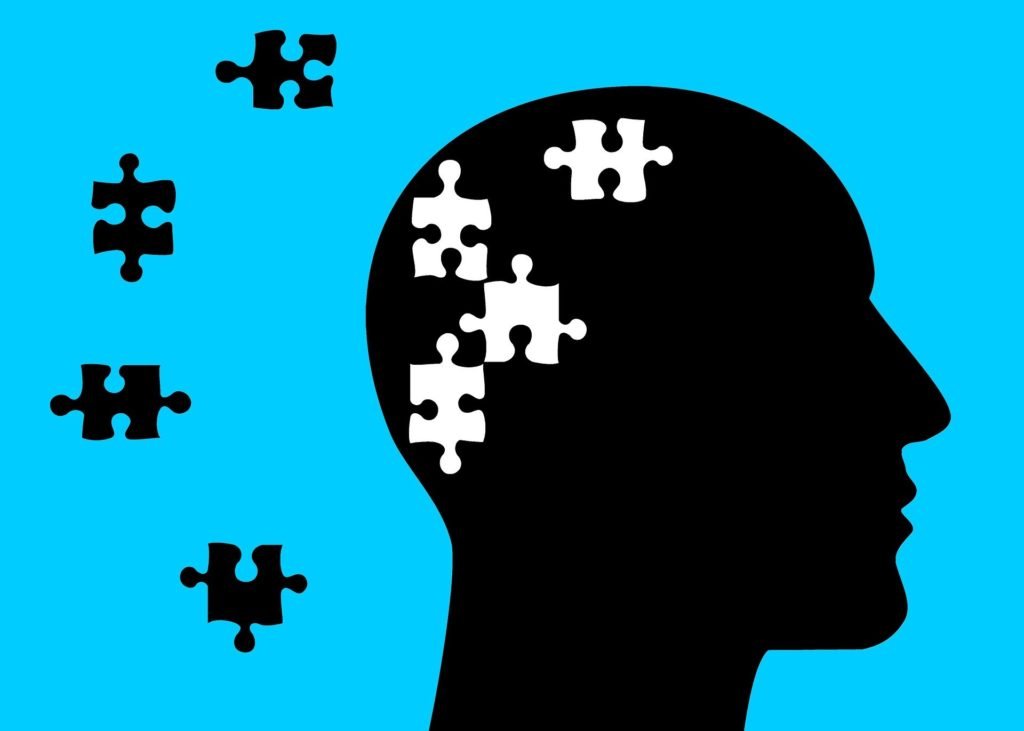
Image Credit: Tumisu / Pixabay
Alzheimer’s disease: The cause of Alzheimer’s
disease is unknown. Several factors are thought to be implicated.
They include; Neurochemical factors, such as deficiencies in the
neurotransmitters acetylcholine, somatostatin, , substance P, and norepinephrine;
viral factors, environmental factors, and genetic immunologic factors.
This presenile dementia accounts for over half of all dementias.
The brain tissue of patients with primary degenerative dementia has three
features: neurofibrillary tangles, neuritic plaques, and granulovascular
degeneration. Prognosis: Poor.
Symptoms:
Onset is insidious. Initial changes are almost imperceptible,
but they gradually progress to serious problems.
Forgetfulness
Recent memory loss
Difficulty remembering and or learning
Deterioration in personal hygiene and appearance
Inability to concentrate
later signs: Difficulty with abstract thinking and activities
that require judgment
Difficulty communicating
Severe deterioration in memory, language, and motor function
Repetitive actions or perseveration
Personality changes, such as restlessness and irritability
Nocturnal awakenings
Disorientation
Urinary or fecal incontinence
Patient may develop twitching and seizures
Death commonly results from an increased susceptibility to infection
Treatment:
No cure or definitive treatment for Alzheimer’s exists.
Doctor may prescribed: a cerebral vasodilators to enhance the brain’s
circulation
Hyperbaric oxygen to increase oxygen supply to the brain
Psychostimulation to enhance the patient’s mood
Antidepressants if the depression seems to exacerbate the patient’s
dementia
Related Resources
Alzheimer’s Association Resources
Alzheimer’s Disease: Resources for Patients and Families
Getting Help with Alzheimer’s Caregiving
Mayo Clinic Alzheimer’s Disease Research Center
Memory Loss: How to Improve your Memory