Medical disclaimer: This page is general health information for education only. It is not medical advice and is not a substitute for diagnosis or treatment by a qualified health professional. It has not been reviewed by a clinician. In an emergency, call 911 or your local emergency number.
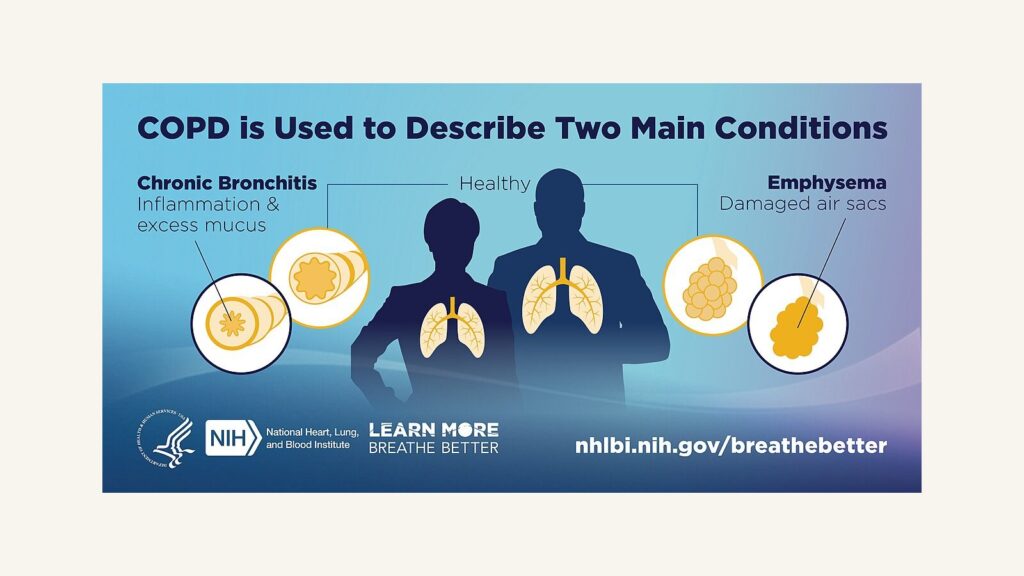
What do these words mean?
Chronic obstructive pulmonary disease, or COPD, is a name for lung conditions that make breathing more difficult. Emphysema describes damage to the air sacs in the lungs. Chronic bronchitis involves long-lasting airway inflammation. Both terms can appear in a discussion of COPD. The NHS COPD overview explains the condition in more detail.
Symptoms and assessment
Breathlessness, an ongoing cough with mucus, wheezing and repeated chest infections can occur with COPD. These symptoms can also have other causes, so a symptom list cannot establish a diagnosis.
If you have severe breathlessness, call 911 or your local emergency number now.
A clinician may ask about symptoms, smoking and other exposures, examine your chest and arrange a breathing test called spirometry. Further tests may help rule out other explanations. The NHS guide to COPD diagnosis describes these tests.
Living with the diagnosis
Treatment cannot reverse established lung damage, but it can help manage symptoms and slow progression. The right plan depends on your circumstances.
Questions to bring
- What do my breathing test results show?
- Which part of the treatment plan should help with my main concern?
- What changes should prompt me to seek help?
- Would pulmonary rehabilitation be appropriate for me?
See all condition guides, use our appointment preparation guide, or read our first aid resources for emergencies.
Sources & further reading
Sources consulted September 20, 2026. This is a drafting date, not a medical review date.